It starts with history
in your hands
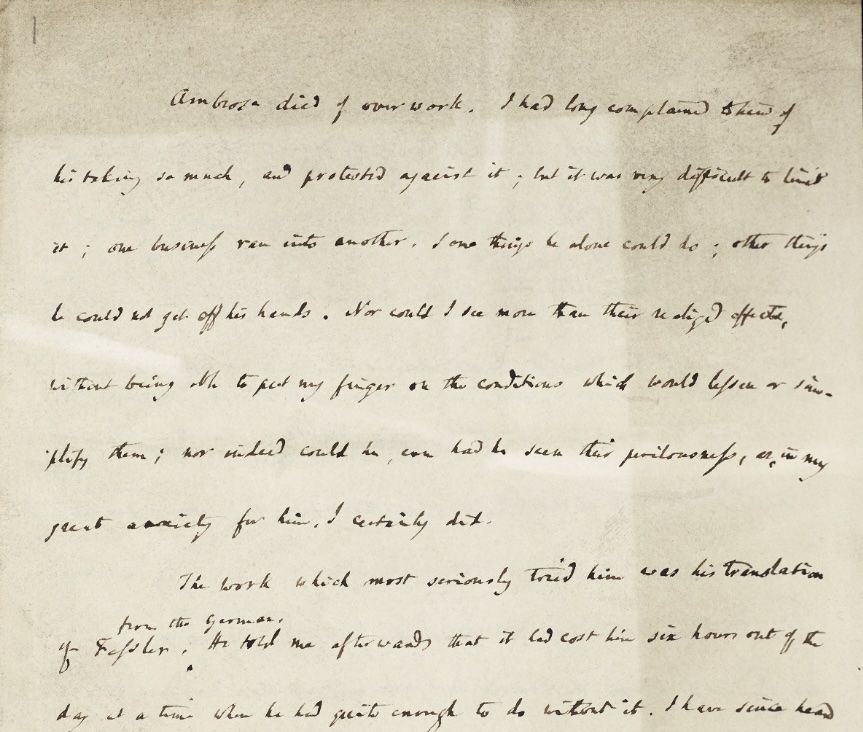
A manuscript, a photograph, a map — fragile, irreplaceable, locked in an archive. Every digitization project begins here: with the physical object, a skilled operator, and the decision to make it accessible. Your capture workflow is the foundation — Rednal is ready when you are.
John Henry Newman
1801–1890
Anglican clergyman, Oxford intellectual, Catholic convert, Cardinal, Saint, Doctor of the Church, and Co-Patron of Education. One of the most influential thinkers of the 19th century, Newman's writings on conscience, education, and the development of doctrine shaped theology across traditions.
This manuscript — the first stanza of his hymn "Lead, Kindly Light", written in his own hand and signed "J.H. Card. Newman, aug 16. 1881" — was donated to the National Institute for Newman Studies by The University of Chicago. It is the document we will follow through the entire Rednal digitization pipeline as you continue scrolling.
Precision meets
preservation
A Phase One IQ4, a book cradle, calibrated lighting, and a single exposure. In one click, the manuscript crosses from physical to digital — and every pixel carries the standards you set.
You set the standard.
Rednal keeps it.
The quality of your digital surrogate depends on the quality of your capture. You bring the expertise, the equipment, and the standards — Rednal ingests, validates, and preserves your work from RAW master to published derivative.
Your Camera, Your Standards
Whether you shoot with a Phase One IQ4 150MP, a Sony A7R V, a DSLR copy stand, or a flatbed scanner — Rednal ingests RAW and TIFF masters from any capture setup and carries them through the pipeline.
Standards Support
FADGI, ISO 19264, Metamorfoze — whatever digitization standard your institution follows. Rednal's API, controlled vocabulary fields, and data import/export mappings are built to accommodate all of them.
Color Management
You embed ICC profiles and calibrate your color space at capture — Adobe RGB, ProPhoto, or sRGB. Rednal preserves that color fidelity from RAW ingestion through 16-bit TIFF derivatives to final delivery.
Format Preservation
Your RAW and TIFF masters are never modified. Rednal generates lossless JPEG 2000 derivatives for serving while your originals remain untouched — archival integrity from day one.
Five layers of data
your captures already carry.
Every RAW or TIFF that enters Rednal carries up to five distinct metadata standards, embedded at capture by your equipment and software. Rednal reads, validates, and indexes all of them — automatically.
From RAW to
tile pyramid
Your RAW and TIFF masters are transformed into pyramidal JPEG 2000 — resolution layers stacked like a ziggurat. Each tile is addressable via the IIIF Image API. Meanwhile, AI transcription works alongside OCR, deciphering handwritten text that traditional engines miss.
The math behind this manuscript
Every region, size, and rotation is a URL. No pre-rendering — the image server computes derivatives on demand from the pyramidal JP2. This tiling makes infinite scale possible — like Google Earth for manuscripts, loading only the tiles you need to support gigapixel archives.
IIIF API in action.
Every image is served through the IIIF Image API, making any region, at any size, in any rotation, available via a simple URL. No special software required — just a browser and a URI.
/{identifier}/{region}/{size}/{rotation}/{quality}.{format}Manifests describe how images are organized into canvases, sequences, and collections. They carry metadata, viewing hints, and structural information that any compatible viewer can interpret. Slide right to reveal the IIIF Presentation 3 manifest, then slide left to view it in the Rednal document viewer.
JSON-LD manifests following IIIF Presentation API 3.0Tiled image pyramids enable seamless deep zoom from thumbnail to full resolution. OpenSeadragon renders tiles on demand, so even a 600-megapixel scan loads instantly and pans smoothly.
Pyramidal JP2 with OpenSeadragon viewer integrationBecause Rednal publishes standard IIIF manifests, your collections work with any compliant viewer — Mirador for scholarly annotation, Universal Viewer for public access, or your own custom build.
Mirador · Universal Viewer · Annona · CustomThe IIIF Content Search API enables word-level search within documents. Results return coordinates that viewers use to highlight matches directly on the page image — no separate text view needed.
Word-level coordinate mapping with on-image highlightingThe IIIF Authentication API lets you control access to restricted materials. Serve degraded images publicly while providing full resolution to authenticated researchers — all through standard IIIF flows.
Tiered access with clickthrough, login, and external auth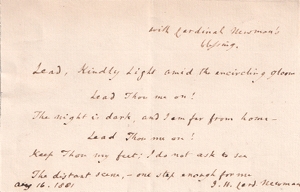
The full document as a thumbnail.
Built on standards the world already trusts
Open standards. Open source. No vendor lock-in. Every layer of Rednal speaks the same protocols that libraries, archives, and museums have relied on for decades.
Structure builds itself
around the image
The IIIF Presentation API wraps each image in a manifest — a JSON-LD document describing canvases, sequences, metadata, and viewing hints. The manifest is the contract between the image and any viewer on the web.
1{2 "_id": "69d54f43484cd0dfad6e17c4",3 "@context": [4 "http://www.w3.org/ns/anno.jsonld",5 "http://iiif.io/api/presentation/3/context.json"6 ],7 "id": "https://manifests.newmanstudies.org/v1/digital_document/69d54f43484cd0dfad6e17c4/manifest",8 "type": "Manifest",9 "label": "Newman, John Henry, Cardinal, 1801-1890",10 "ocrStatus": "No OCR",11 "vectorStatus": "Completed",12 "downloadPDF": {13 "pdfURL": "",14 "isDownloadEnable": false15 },16 "aiChatBot": "enable",17 "documentType": "iiif",18 "metadata": [19 { "label": "Identifier", "value": "HistoricalMSS_0018_005_01" },20 { "label": "Call Number", "value": "HistoricalMSS_0018_005_01" },21 { "label": "Collection", "value": "University of Chicago" },22 { "label": "Creator", "value": "Newman, John Henry, Cardinal, 1801-1890" },23 { "label": "Sponsor", "value": "University of Chicago" },24 { "label": "Date", "value": "1881-08-16" },25 { "label": "Page Count", "value": "1" },26 { "label": "Coverage", "value": "The Oratory, Hagley Road, Edgbaston, Birmingham" },27 { "label": "Location", "value": "University of Chicago" },28 { "label": "Type", "value": "Manuscripts" },29 { "label": "Content Type", "value": "Poetry" },30 { "label": "Language", "value": "English" }31 ],32 "description": "Lead Kindly Light written on a postcard and sent with Cardinal Newman's blessing.",33 "viewingDirection": "left-to-right",34 "behavior": ["individuals", "paged"],35 "rights": "https://digitalcollections.newmanstudies.org/pages/terms",36 "logo": {37 "id": "https://nins-profile-images.s3.amazonaws.com/logo/nins-logo.png",38 "type": "Image"39 },40 "items": [41 {42 "id": "https://manifests.newmanstudies.org/.../canvas/47d1347e-d1cb-4f5d-97a4-dea0a396a8d8",43 "type": "Canvas",44 "label": "1",45 "height": 1013,46 "width": 1591,47 "annotations": [48 {49 "id": "https://manifests.newmanstudies.org/.../contentAsText/47d1347e",50 "type": "AnnotationPage"51 }52 ],53 "items": [54 {55 "id": "https://manifests.newmanstudies.org/.../annotation_page/96dca2c5",56 "type": "AnnotationPage",57 "items": [58 {59 "id": "https://manifests.newmanstudies.org/.../imageanno/abbdbfa5",60 "type": "Annotation",61 "motivation": "painting",62 "target": "https://manifests.newmanstudies.org/.../canvas/47d1347e",63 "body": {64 "@id": "https://iiif.newmanstudies.org/iiif/2/B16%2FUniversityChicago%2Fhistoricalmss_0018_005_01.jp2/full/full/0/default.jpg",65 "@type": "dctypes:Image",66 "format": "image/jpeg",67 "service": {68 "@context": "http://iiif.io/api/image/2/context.json",69 "@id": "https://iiif.newmanstudies.org/iiif/2/B16%2FUniversityChicago%2Fhistoricalmss_0018_005_01.jp2",70 "protocol": "http://iiif.io/api/image",71 "width": 1591,72 "height": 1013,73 "sizes": [74 { "width": 199, "height": 127 },75 { "width": 398, "height": 253 },76 { "width": 796, "height": 507 },77 { "width": 1591, "height": 1013 }78 ],79 "tiles": [80 {81 "width": 1024,82 "height": 1013,83 "scaleFactors": [1, 2, 4, 8]84 }85 ],86 "profile": [87 "http://iiif.io/api/image/2/level2.json",88 {89 "formats": ["jpg", "tif", "gif", "png"],90 "maxArea": 1611683,91 "qualities": ["bitonal", "default", "gray", "color"],92 "supports": [93 "regionByPx", "sizeByW", "cors", "regionSquare",94 "canonicalLinkHeader", "sizeByPct", "regionByPct",95 "rotationArbitrary", "sizeByH", "baseUriRedirect",96 "rotationBy90s", "mirroring"97 ]98 }99 ]100 }101 }102 }103 ]104 }105 ]106 }107 ],108 "thumbnail": {109 "id": "https://iiif.newmanstudies.org/iiif/2/B16%2FUniversityChicago%2Fhistoricalmss_0018_005_01.jp2/full/100,/0/default.jpg",110 "type": "Image"111 },112 "service": [113 {114 "@context": "http://iiif.io/api/search/0/context.json",115 "@id": "https://manifests.newmanstudies.org/.../search/69d54f43484cd0dfad6e17c4",116 "label": "Search within this manifest",117 "profile": "http://iiif.io/api/search/0/search"118 }119 ]120}
Not either/or.
Both/and.
Rednal doesn't replace ArchivesSpace, AtoM, Islandora, or Omeka — it works alongside them. Every protocol your existing systems speak, Rednal speaks too. Your collections can live everywhere.
Curator tools meet
researcher experience.
Rednal is a complete platform — not just a viewer. From ingestion and curation on the backend to discovery and AI-powered research on the frontend.
Frontend
Data Visualizations
Sunburst charts, interactive maps, timeline views, and context managers that let researchers see patterns across collections at a glance.
Watch demoCompare Documents
Side-by-side viewing of multiple manuscripts, synchronized zoom, and overlay modes for comparing versions, drafts, or related materials.
Watch demoNon-Destructive Editing
Crop, rotate, adjust brightness, and annotate without modifying the original. Every edit is a layer — the archival master is never touched.
Watch demoUser Profiles
Save searches, bookmark items, build personal collections, and export citations. Authenticated researchers get a workspace tailored to their research.
Watch demoAI Document Chat
Ask questions in natural language and get answers drawn directly from the documents. RAG-powered conversation with your entire collection.
Watch demoTranscriptions
Full-text transcriptions are selectable and searchable. AI-powered OCR handles both printed text and handwriting, mapping every word to its coordinates on the page.
Watch demoDocument Details
Context cards below the document viewer surface author, contributor, location, and sponsor information with automated search links — one click to find related materials.
Watch demoAdvanced Search
Search by metadata or full-text content using all words, any word, exact phrase, or wildcard matching. Over a dozen filters — date, creator, collection, language, and more — to find exactly what you need.
Watch demoBrowse Collections
Navigate collections, sub-collections, and items through an intuitive browsing interface. The hierarchy mirrors the archive — researchers explore materials the way they were originally organized.
Watch demoRelated Documents
Every document page surfaces related materials automatically — connecting letters, drafts, and manuscripts across collections so researchers discover connections they didn't know to look for.
Watch demoDownload Documents
Researchers can download documents directly from the viewer — individual pages or complete documents — for offline study, citation, and reuse.
Watch demoDeep Zoom
Zoom from thumbnail to full resolution seamlessly. Tiled image pyramids load only the pixels you need — gigapixel manuscripts render as smoothly as a map.
Watch demoBackend
Digital Asset Manager
Ingest, organize, and manage digital objects from capture to delivery. Batch processing, format conversion, and quality validation — all in one place.
Watch demoLightboard
Visual review interface for evaluating captures, checking color accuracy, and approving images before they enter the pipeline.
Watch demoDocument Creation
Build multi-page documents from individual captures. Assign metadata, define sequences, and generate IIIF manifests — all through a curator-friendly interface.
Watch demoControlled Vocabularies
Standardized language fields ensure consistency across cataloging. Curators select from managed term lists — no free-text drift, no duplicates.
Watch demoNested Collections
Card view or tree view — curators can organize and add collections at any depth. Unlimited hierarchy that mirrors the way archives are actually structured.
Watch demoREST API
Every feature available through the interface is also available programmatically. IIIF endpoints, metadata queries, search, and content delivery — all via documented REST APIs.
Watch demoExtract Metadata with AI
Select pages and let AI automatically extract metadata for curator review. Unrecognized terms are flagged for attention — so nothing slips through that doesn't match your controlled vocabulary.
Watch demoAnnotations
Insert links, videos, images, or text annotations directly onto any canvas or canvas layer. Rich media annotations travel with the manifest wherever it goes.
Watch demoOCR Zones
Define logical zones for OCR — multi-column layouts, image regions, marginalia. Curators draw zones so the OCR engine processes each area in the correct reading order.
Watch demoNon-Destructive Image Editing
Curators can adjust brightness, contrast, rotation, and more — then save the result. Every edit is reversible from the backend. The archival master is never modified.
Watch demoNon-Destructive Crop
Crop and save canvases without altering the original image. Thumbnails update automatically to reflect the crop — and every crop can be undone at any time.
Watch demoIf they can't find it,
it doesn't exist.
Digitization without discovery is just expensive storage. Rednal makes every page, every word, every metadata field searchable — so researchers find what they need, not just what they knew to look for.
AI-Powered OCR
State-of-the-art recognition handles printed text, handwriting, and mixed-language documents. Every word is mapped to page coordinates for precise search highlighting.
Full-Text Search
Elasticsearch indexes both metadata and OCR text with typo tolerance, faceted filtering, and relevance ranking. Search across millions of pages in milliseconds.
Faceted Filtering
Narrow results by creator, contributor, date, collection, type, language, call number, or coverage. Filters update counts in real time as you refine.
A node,
not a silo
Because Rednal speaks IIIF, OAI-PMH, and open APIs, your collections join a global network. Researchers can cross-query, aggregate, and remix materials across institutions. Your archive becomes part of something larger.
The manuscript lives on
The same letter that began this journey — fragile, handwritten, locked in an archive — is now searchable, zoomable, shareable, and conversational. From object to access. From one institution to every researcher on earth.
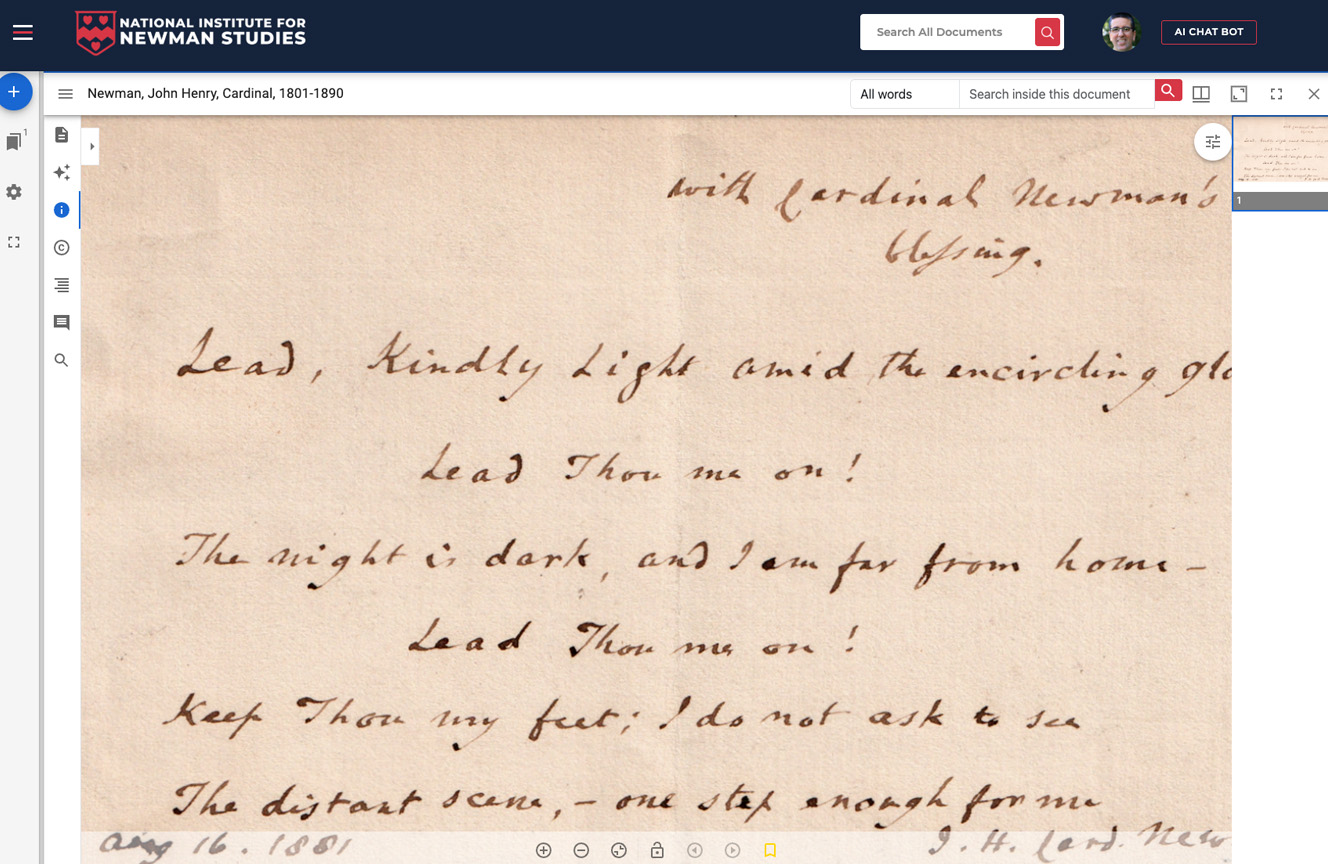
From archive to access. The journey is complete.
View the live documentReady to digitize your collections?
Explore the documentation, see a live demo, or reach out to our team.